Make a Mind Jar: A Mindfulness Tool for Anxiety & Stress
Inside: Easy instructions on how to make a mind jar and why it’s such an amazing calming tool for kids. With simple steps and helpful tips, you’ll want to make one right away for your classroom or home.
There’s something so calming about a mesmerizing mind jar. They’re quick to make and can be a surprisingly powerful tool for kids who are feeling overwhelmed, anxious, or just a bit out of sorts.
Also called calm down jars or mindfulness glitter jars, these simple visual aids are often used with students who have Autism or additional needs, but they’re just as helpful in any classroom or at home. They give kids something soothing to focus on to help them settle down and relax when they’re experiencing stress, anxiety, or are overwhelmed for any reason.
Teachers and parents can easily make their own mind jars, but I recommend getting your kids involved. You can even make it into a science lesson by explaining the way the glitter falls more slowly when you add extra glue and I highly recommend adding them to your calm down corner.
This fun activity can be a great way to entertain kids and secretly give them a tool to distract them during the school break. Children love to decide which colors to use and are excited to watch the glitter move around in the jar when they’re finished.
More…
Mind jars are simple enough for adults to make, but it’s even better when kids get involved. They love picking their own colors and feel proud of creating what they see as a fun little game, while you know the calming magic it actually holds as the glitter slowly settles.
It’s also a great opportunity to sneak in a bit of science by showing how more glue makes the glitter fall slower. I definitely recommend adding a few to your calm down corner as they’re a fun, ready-to-go tool for self-regulation that just might save your sanity.
The Science Behind Mind Jars
Mind jars aren’t just a fun craft or cute calm-down tool. This simple mindful activity creates a sensory experience that helps shift what’s happening in the brain. When kids sit and watch the glitter swirl and settle, it engages the parasympathetic nervous system which is the part responsible for calming the body after a stress response. It’s like a gentle nudge out of “fight or flight” to give their brain a moment to reset so they can think more clearly and feel more in control.
The combination of watching the glitter move and holding the jar in their hands gives kids a calming sensory experience. The mesmerizing action helps slow their breathing to take the edge off those big emotions.
So, while your students might just think it’s fun to shake and stare at a jar of glitter, they’re actually learning how to pause, reset, and manage tricky emotions. This is a skill they’ll carry with them for life.

Research indicates that mindfulness enables cognitive and emotional awareness, diminishes emotional distraction and cognitive rigidity, and allows for intentional regulation of behavior, attention, and emotion… mindful practices can stop dysregulation by interrupting perseveration on negative thoughts or behaviors, increasing tolerance of difficult emotional sensations, and promoting self-compassion and empathy.

How to Make a Mind Jar
You will need:
Instructions
Start by filling your jar about three-quarters full with warm water. Add some glitter glue (the more you use, the slower the glitter will fall, but don’t go overboard or it might not move at all), a pinch of extra glitter, and a drop or two of food coloring if you’d like. Give it a good stir or whisk until the glue dissolves.
Screw the lid on and give it a good shake to test it out. You can add more glitter or glue if you want it to settle more slowly. Once you’re happy with how it looks and moves, top up the jar with water and tighten the lid. If you’re worried about curious little hands opening it, a bit of strong glue around the lid can help seal it shut.
Tip: If you’re using a plastic drink bottle, mix everything in a jug first and wait until the water has cooled a bit before pouring it in so the bottle doesn’t warp.
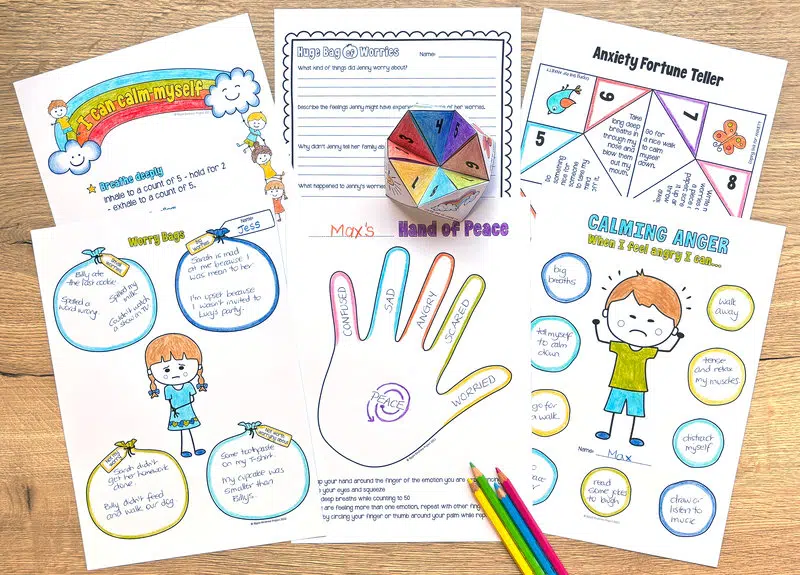
If your students are struggling to control big emotions, this pack with worksheets, coloring pages, and a fun paper fortune teller will be your best friend!
How to Use with Younger Children
Shake the jar and explain that sometimes our minds feel full of thoughts that spin around madly inside our head, just like the glitter in the jar. These busy thoughts can bring up big feelings like anger and anxiety, sadness, or worry, and that’s totally okay. But before those feelings take over, it helps to pause and calm down. Let them know that when we’re upset, we often breathe faster, which doesn’t help our bodies feel better.
Use the mind jar when the class feels unsettled or with individual children who need a quiet moment. Have them sit and focus on the swirling glitter, breathing in slowly and deeply as they watch it settle. If they’re still not calm when the glitter stops, just shake it again to give them a little more time.
You can also use it as a visual timer when you practice mindful breathing with your children, asking them to focus on their slow, steady breath until the glitter falls to the bottom.
Mind jars are a gentle, calming alternative to traditional time-outs and help children learn how to self-soothe in a safe and supportive way.
How to Use With Older Children
Start by showing students the jar with the glitter settled at the bottom. Explain that the jar represents their head: the water is their mind, and the glitter is their thoughts, memories, worries, and anything else swirling around in there. When the glitter is still, their mind is clear, calm, and focused. But when you shake the jar, it shows what their mind can look like during times of stress and anxiety, clouded, chaotic, and hard to think things through.
You can also point out that when we’re in that overwhelmed state, our breathing often becomes shallow and fast, which adds more stress to our bodies.
Let them know that something as simple as watching the glitter settle while focusing on slow, deep breathing can help calm their thoughts. It gives the brain a break from the constant chatter and brings them back to the present.
Keep the jar in a quiet, accessible part of the classroom so students can take a moment to reset when they need it.

These coping strategies task cards are a simple, visual way for children in PreK to 2nd grade to learn how to manage big emotions. With easy-to-understand wording and pictures, kids can create their own personalized deck or use a class set when they need a break.
Tips for Using Mind Jars
Mind jars are really versatile and can be used in lots of ways to support calm and focus in the classroom or at home. Here are a few ideas to get the most out of them:
Have your own way of using a mind jar or a favorite recipe? I’d love to hear about it in the comments below.
Updated: July 30th, 2025
You may also like…

AUTHOR: Lisa Currie – Ripple Kindness Project
Lisa is passionate about contributing to a happier world by building emotional intelligence in kids through fun and engaging social-emotional learning resources. Her core value is kindness as she believes it to be the “mother” of all character traits. She started Ripple Kindness Project to spread kindness in schools and communities. She is also the founder and director of an outreach program that supports disadvantaged families.
I made these for my students and they LOVED them. I also recommend using plastic jars for younger children. 😅
Hey Jeffry,
Aren’t they great! If you get a chance, ask your students to bring in a plastic drink bottle or jar and make them together. They love it and it’s a great science lesson!
Lis 🙂
I’m a Foster Granny and am going to make a few jars to use in my classroom of 28, 8 and 9 year olds. I just happened across this iny memories on Facebook. Thanks for the ideas!!
Hi Laura,
I love that! Good on you. I used to run an outreach program for disadvantaged families. Many of the women who came were victims of domestic voilence. I made jars to put on our morning tea tables for them to shake and watch while they were chatting with one another. I just love mind jars for all sorts of reasons.
Regards,
Lis 🙂